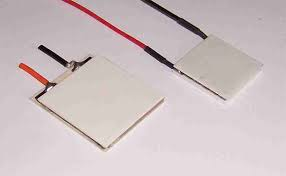
Thermoelectric technology has become an important solution for applications that require precise temperature control, compact cooling, and dependable thermal Bulk Thermoelectric Modules performance. From electronics and medical equipment to automotive systems and laboratory instruments, thermoelectric components help engineers manage heat in places where traditional cooling methods may be too large or complex. Choosing the right TEC chip company is therefore an important decision for businesses that depend on consistent product quality and long-term performance.
A reliable thermoelectric partner should offer more than standard components. It should provide technical knowledge, manufacturing consistency, quality assurance, customization options, and dependable customer support. Understanding what to look for can help buyers select a supplier that matches their technical and commercial requirements.
Understanding the Role of a TEC Chip Company
A TEC chip company specializes in thermoelectric cooling components that use the Peltier effect to transfer heat from one side of a module to another when electrical current is applied. This technology allows a thermoelectric module to create a cooling surface while transferring heat toward the opposite side.
A professional manufacturer typically develops and produces components for different temperature-control applications. These may include electronics cooling, laser temperature stabilization, optical equipment, medical devices, scientific instruments, food and beverage equipment, and portable cooling systems.
When evaluating a supplier, buyers should consider whether the company understands the specific requirements of their industry. A supplier with broad application experience can often provide better recommendations regarding module size, electrical specifications, operating temperatures, heat dissipation, and system integration.
Evaluate Manufacturing Quality
Manufacturing quality is one of the most important factors when choosing a thermoelectric supplier. A TEC module contains several carefully assembled components, including semiconductor materials, ceramic plates, electrical connections, and solder or bonding materials. Small variations during production can influence thermal performance and reliability.
A trusted TEC chip company should have controlled manufacturing processes and consistent quality standards. Buyers should ask about production equipment, inspection procedures, testing systems, and quality management practices.
Quality control should ideally cover incoming materials, assembly, electrical performance, thermal performance, and final inspection. Consistent testing helps ensure that products meet their specified electrical resistance, cooling capacity, temperature difference, and durability requirements.
Check Product Specifications Carefully
Different applications require different thermoelectric characteristics. Therefore, buyers should not select a module based only on its physical appearance or price.
Important specifications can include maximum current, maximum voltage, cooling capacity, temperature difference, module dimensions, operating temperature range, and thermal resistance. A good supplier should clearly provide technical documentation for its products.
The company should also be able to explain how its products perform under different operating conditions. This is especially important for industrial applications where equipment may operate continuously or under changing environmental temperatures.
Clear specifications make it easier for engineers to compare products and determine whether a module is suitable for a particular system.
Look for Customization Capabilities
Standard thermoelectric modules are useful for many applications, but some projects require customized solutions. Dimensions, electrical characteristics, ceramic materials, wire configurations, and performance requirements can vary from one application to another.
A capable TEC chip company should have the technical resources to support customization when necessary. This does not necessarily mean every supplier needs to manufacture completely new products. Instead, the supplier should be able to discuss engineering requirements and determine whether an existing design can be modified.
Customization can be particularly valuable when a thermoelectric module must fit into a compact enclosure or operate within a specific temperature range. A supplier with engineering expertise can help customers identify practical solutions before large-scale production begins.
Consider Experience With Bulk Thermoelectric Modules
Businesses purchasing large quantities should pay special attention to production capacity and supply consistency. Buying Bulk Thermoelectric Modules requires a supplier that can maintain stable quality across larger production runs.
A company may provide an excellent sample but struggle to reproduce the same performance when an order becomes significantly larger. For this reason, buyers should investigate production capacity, quality control procedures, lead times, and inventory management.
For large-volume projects, communication between the buyer and manufacturer is also important. Production schedules should be clearly discussed, and the supplier should provide realistic delivery expectations. Reliable supply planning can help businesses avoid manufacturing interruptions and unexpected delays.
Examine Testing and Quality Assurance
Testing is another major indicator of a trustworthy thermoelectric manufacturer. A professional supplier should have procedures for checking modules before shipment.
Depending on the product and application, testing may include electrical resistance measurements, insulation checks, dimensional inspection, thermal performance testing, and visual inspection. Some applications may require additional reliability testing under temperature cycling or extended operating conditions.
Buyers should ask what tests are performed and whether testing records or quality reports are available. Transparent quality assurance gives customers greater confidence that the products they receive will perform according to specifications.
Assess Technical Support
Thermoelectric cooling systems involve more than simply installing a TEC module. The module needs to work with a suitable heat sink, power supply, thermal interface, and control system. Poor system design can reduce cooling performance even when the module itself is high quality.
For this reason, technical support can be a valuable advantage when selecting a supplier. A knowledgeable TEC chip company should be able to answer questions about operating conditions, module selection, heat removal, and system integration.
Technical support is especially useful during the development stage of a new product. Engineers may need assistance comparing different module specifications or determining which component is appropriate for a particular thermal load.
Review Reliability and Customer Service
Long-term cooperation depends on more than product quality. Communication, responsiveness, documentation, and after-sales support can have a significant effect on the overall supplier experience.
Before placing a major order, buyers should evaluate how quickly the supplier responds to technical questions and whether information is presented clearly. A reliable partner should communicate honestly about capabilities, production schedules, product limitations, and potential challenges.
Customer service becomes even more important when purchasing customized products or large quantities. Clear communication can reduce misunderstandings and help both sides maintain realistic expectations.
Compare Price With Overall Value
Price is naturally an important consideration, but the cheapest thermoelectric module is not always the most economical choice. A low-cost component may have inconsistent performance, shorter service life, or limited technical support.
Instead of comparing prices alone, businesses should evaluate total value. Factors such as product reliability, energy efficiency, consistency, warranty support, customization, delivery performance, and technical assistance can all influence the actual cost of ownership.
A slightly higher-quality module may provide better long-term value if it reduces equipment failures and maintenance requirements.
Verify Certifications and Documentation
Depending on the target market and application, relevant certifications and compliance documentation may be important. Buyers should ask suppliers whether their products meet applicable industry or market requirements.
Technical datasheets, drawings, testing reports, material information, and quality documentation can also help engineers evaluate a product before purchase. A manufacturer that maintains organized documentation demonstrates a professional approach to product development and customer support.
Build a Long-Term Partnership
The best TEC chip company is not simply the one that can provide a component at an attractive price. A strong thermoelectric partner should combine manufacturing capability, product quality, technical expertise, customization support, reliable delivery, and effective communication.
Businesses should evaluate suppliers carefully before committing to large orders. Requesting samples, reviewing specifications, asking about testing procedures, and discussing production capacity can provide valuable insight into a manufacturer’s capabilities.
For companies that depend on dependable thermal management, choosing the right supplier can have a direct impact on product performance and customer satisfaction. By focusing on quality, engineering support, production consistency, and long-term cooperation, buyers can find a thermoelectric partner capable of supporting both current requirements and future growth.
